Recommended Free Tools
Some links on this page are affiliate links: if you buy through them we may earn a commission, at no extra cost to you.
Short answer: Agatha Christie’s 1934 novel remains the definitive version, the 1974 film is the classic all-star screen benchmark, the 2010 David Suchet adaptation gives the moral dilemma unusual weight, and the 2017 Kenneth Branagh film is the most modern, visually expansive interpretation. The 2006 and 2023 games go further than film or television by adding investigators, puzzles, and player-controlled discovery.
Spoiler warning: This comparison discusses the structure, themes, and endings of the story and its adaptations. Read the opening sections first if you want to choose a version without learning how the mystery resolves.

The 1934 novel is the baseline
Agatha Christie’s Murder on the Orient Express was published as a novel in 1934, after appearing in the United States as a six-part Saturday Evening Post serial under the title Murder on the Calais Coach in 1933.
Hercule Poirot boards the Simplon-Orient-Express. When the train becomes stranded by snow, an American passenger is found murdered inside a locked compartment. The passengers form a tightly contained suspect group, and Poirot must establish who they are, how they are connected, and whether another attack is imminent.
Popular on Amazon

- The complete trilogy of Agatha Christie-inspired thrillers starring Kenneth Branagh as Hercule Poirot.
The novel works because Christie controls information with exceptional precision. Evidence arrives through interviews, observation, misleading testimony, and Poirot’s private reasoning. The train provides a compact setting, but the large ensemble prevents the mystery from feeling simple. Its resolution is also more than a mechanical explanation: it forces Poirot to confront the difference between legal justice and what the characters believe moral justice requires.
That distinction matters when comparing adaptations. The novel lets readers assemble the case through narration and interrogation. Films must make the process visible through acting, editing, camera placement, and production design. Radio must create the train through voices and sound. Games make the audience responsible for searching, questioning, and solving.
“The impossible cannot have happened, therefore the impossible must be possible in spite of appearances.”
The Tool Desk
Outbyte Driver Updater FREEFix the driver behind crashes, sound loss and screen glitchesFind Drivers →Outbyte PC Repair FREEClear out junk files and repair common Windows errorsFree Scan →Special offer. See more information about Outbyte and uninstall instructions. Please review EULA and Privacy policy.— Hercule Poirot
If you want the canonical version, start here. Every adaptation changes the balance between clue-solving, character drama, atmosphere, spectacle, and moral emphasis.
1974 film: the landmark classic
Sidney Lumet’s 1974 film stars Albert Finney as Poirot and assembles one of the most famous casts in mystery cinema, including Lauren Bacall, Ingrid Bergman, Sean Connery, John Gielgud, Jacqueline Bisset, Anthony Perkins, Vanessa Redgrave, and Wendy Hiller.
This is the established big-screen reference point: formal, theatrical, star-centered, and built around the pleasure of watching a major ensemble give each passenger a distinct social presence. Finney’s Poirot is especially mannered and physically expressive, making the detective’s rituals and vanity part of the performance rather than treating him as a neutral puzzle-solving machine.
The film’s greatest strength is its concentrated ensemble acting. It does not need to turn the train into an action spectacle; the suspense comes from faces, pauses, status differences, and the gradual rearrangement of suspicion. Ingrid Bergman’s performance received major recognition, and the film remains the version most often used as the classic comparison point.
It is safer to call the 1974 film the landmark classic than to call it the objectively most faithful adaptation. Its value lies in theatrical polish, period atmosphere, and the collective power of its cast.
Best for: viewers who want the classic all-star film, traditional mystery staging, and an intensely concentrated theatrical experience.
2001 television film: a modern-era reworking
The Christie estate identifies a 2001 television remake starring Alfred Molina as Poirot. It occupies an important place in the adaptation timeline, between the celebrated 1974 film and the more extensively documented 2010 television version.
Also popular on Amazon
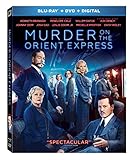
- A lavish train ride through Europe quickly unfolds into the thrilling mystery of thirteen strangers stranded on a train, where everyone's a suspect. One man must race against time to solve the puzzle before the murderer strikes again.
The available production information supports treating it as a historically relevant television reworking, but not making a detailed scene-by-scene claim about its fidelity or characterization. It is therefore best approached as a version for viewers completing the adaptation history or specifically interested in Molina’s Poirot.
Do these 3 things before closing this tab:
1Scan for outdated or missing drivers - takes under a minute2Clear out junk files and repair common Windows errors3Fix the driver behind crashes, sound loss and screen glitchesBest for: adaptation completionists and Alfred Molina viewers. It is not the safest first recommendation when the reader wants the most influential or most clearly differentiated version.
2004 BBC Radio 4 adaptation: Christie through voice and sound
BBC Radio 4 adapted the story in 2004, with John Moffatt playing Poirot. Radio removes the visual tools available to film, so the train is constructed through dialogue, vocal performance, pauses, movement in the soundscape, and the listener’s imagination.
That format suits Christie’s interrogation-heavy structure. Radio can move efficiently through questioning and preserve the importance of what each character says, how they say it, and when they fall silent. It cannot provide the visual spectacle, costumes, locations, or instant recognition that drive the 1974 and 2017 films, but it also avoids allowing visual scale to overwhelm the logic of the mystery.
Best for: listeners who want a dialogue-led adaptation and anyone interested in how the enclosed mystery functions without visible staging.
2006 Windows game: an expanded interactive retelling
The 2006 Windows adventure game changes the audience’s role more radically than any conventional screen adaptation. Poirot is temporarily incapacitated, and the player investigates through Antoinette Marceau, an Orient Express employee added for the game.
It uses point-and-click exploration, inventory objects, interrogations, eavesdropping, puzzles, selectable difficulty modes, and alternate endings. Instead of simply receiving the evidence in Christie’s chosen order, the player searches compartments, decides which interactions to pursue, and controls the pace of discovery.
That structure makes the game an expanded adaptation rather than a playable copy of the novel. Antoinette gives the player a viewpoint inside the train, while Poirot remains part of the story and is voiced by David Suchet. The alternate endings also make the conclusion more variable than in the fixed literary source.
The game’s main trade-off is clear: it offers investigation as an activity, but the player’s search can interrupt the tightly controlled rhythm that makes the novel work. It is most appealing to people who enjoy examining objects, revisiting locations, and solving puzzles rather than passively watching an investigation unfold.
Quick wins for a faster PC:
Fix the driver behind crashes, sound loss and screen glitchesFind Drivers →Clear out junk files and repair common Windows errorsFree Scan →Scan for outdated or missing drivers - takes under a minuteDriver Scan →Best for: point-and-click players and fans who want to investigate the train themselves. It should be described as an older-PC adventure game, not as a substitute for the novel’s precisely controlled narration.
Also popular on Amazon

- Experience murder, suspense, and intrigue in Murder on the Orient Express, Death on the Nile, The Mirror Crack’d, and Evil Under the Sun. Each film showcases meticulous storytelling, clever detective work, and world-class performances, making this collection perfect for mystery lovers and Agatha Christie fans seeking timeless cinematic thrillers in high-definition quality for home entertainment or collectors’ shelves.
- Experience murder, suspense, and intrigue in Murder on the Orient Express, Death on the Nile, The Mirror Crack’d, and Evil Under the Sun. Each film showcases meticulous storytelling, clever detective work, and world-class performances, making this collection perfect for mystery lovers and Agatha Christie fans seeking timeless cinematic thrillers in high-definition quality for home entertainment or collectors’ shelves.
- Enjoy native 4K resolution (2160p) with HDR10 for stunning visuals and true-to-life color, alongside Blu-ray quality audio. Region-free discs ensure worldwide compatibility, while the original aspect ratio and HEVC / H.265 codec maintain the director’s vision. Whether for immersive home viewing or building a premium film collection, every detail is preserved beautifully.
- Collectors will love the luxurious packaging, including a slipbox, DigiPack with inner print, a 64-page booklet, four collectible posters, and replica memorabilia. These extras provide a tangible connection to the stories and actors, making this edition a perfect gift, display item, or centerpiece for any home cinema setup, offering both entertainment and collectible value.
- Featuring a legendary ensemble cast including Ingrid Bergman, Maggie Smith, Bette Davis, Mia Farrow, David Niven, Diana Rigg, Sean Connery, and Elizabeth Taylor, this collection celebrates iconic performances that define classic cinema. Each film delivers suspenseful plots, memorable dialogue, and intricate mysteries that keep audiences engaged and enthralled from start to finish, honoring Agatha Christie’s timeless legacy.
2010 David Suchet television film: the moral dilemma in the foreground
The Christie estate describes the 2010 television film as generally faithful to the original novel while placing greater emphasis on its religious and moral themes. David Suchet’s Poirot confronts the nature of justice and the consequences of his final decision more explicitly.
That emphasis makes this version distinct from adaptations whose main appeal is the celebrity ensemble or visual spectacle. The mystery remains important, but the conclusion is treated as a test of Poirot’s principles. What matters is not only whether he can explain the crime, but what he believes he must do after understanding it.
“Most faithful” is not a measurable verdict here; the more precise description is that the estate presents it as generally faithful while also identifying its stronger moral and religious focus. Its Poirot is established, controlled, and deeply concerned with the implications of choosing between formal law and a competing idea of justice.
Free tools Windows power users keep installed
One-click scans. No signup required.
Best for: David Suchet fans and viewers who want the ethical dilemma foregrounded over spectacle.
2017 Kenneth Branagh film: the modern blockbuster interpretation
Kenneth Branagh directed and stars in the 2017 theatrical film, with a large ensemble that includes Tom Bateman, Lucy Boynton, Olivia Colman, Penélope Cruz, Willem Dafoe, Judi Dench, Johnny Depp, Josh Gad, Derek Jacobi, Leslie Odom Jr., Michelle Pfeiffer, and Daisy Ridley. Michael Green wrote the screenplay. The film opened in the United Kingdom on November 3, 2017, and in the United States on November 10, 2017.
The film retains the essential locked-train mystery and ensemble structure, but presents them through contemporary blockbuster expectations. The camera is more mobile, the visual scale is more prominent, and Branagh’s Poirot is positioned as the center of a star-driven, highly polished production.
Its comparison with the 1974 film is therefore less about one being a simple replacement for the other than about two different ideas of cinematic Christie. The 1974 version emphasizes theatrical formality and ensemble performance. The 2017 version emphasizes movement, visual scale, modern suspense, and the presence of a director-actor at the center.
What’s actually slowing this PC down?
Pick the symptom - the matching free tool is one click away.
The 2017 film is a modern reworking, not a visual duplicate of the 1974 film. Viewers should not assume that its more energetic presentation makes it either more or less faithful overall without checking particular scenes against the novel.
Best for: new viewers, mainstream movie audiences, and anyone who wants a glossy contemporary theatrical adaptation.
2023 graphic novel: a visual-literary middle ground
The official 2023 graphic novel is a full-color adaptation written and illustrated by Bob Al-Greene. It offers a different balance between prose and cinema: the mystery remains reader-controlled, but character reactions, compartment geography, objects, and the crowded train can be presented directly through panels.
Also popular on Amazon

- Factory sealed DVD
Unlike film, a graphic novel does not have to show every moment in real time. A sequence can place expressions, clues, and locations beside one another, allowing the reader to control the pace and pause over details. Unlike the prose novel, it communicates much of the atmosphere visually rather than through narration.
It is an authorized illustrated route into the story for longtime fans and new readers. It also works well for readers who want a shorter, more visual experience without moving all the way to an interactive game.
Best for: visual readers, collectors, younger readers, and anyone looking for an illustrated adaptation rather than another film continuity.
Kenneth Branagh audiobook: the novel performed, not rewritten
The official Christie site identifies an audiobook of the novel narrated by Kenneth Branagh and produced by radio producer and director Cherry Cookson.
This is an important distinction. The audiobook is a performance of Christie’s prose, not the soundtrack of the 2017 film and not a dramatization of Michael Green’s screenplay. The original narrative remains central, so listeners experience Christie’s structure and wording while hearing Branagh’s interpretation of the material.
It offers an especially interesting comparison with Branagh’s film performance. In audio, Poirot must be conveyed through narration and voice rather than costume, gesture, camera framing, or physical action.
Best for: listeners who want the original story in audio and readers curious about the difference between narration and on-screen embodiment.
2023 Microids game: faithful but augmented
Microids describes its 2023 game as a “faithful but augmented” adaptation. It moves the framework to 2023 and adds Joanna Locke, a new investigator who shares the playable investigation with Poirot.
Joanna’s sections use playable flashbacks, allowing the player to leave the train environment. The game also adds mind maps, deductions, object manipulation, third-person exploration, and voiced dialogue. These systems turn the investigation into a contemporary adventure-game experience rather than a direct recreation of the novel’s reading process.
Crashes, No Sound, or Screen Glitches?
Random freezes, missing sound and display glitches usually trace back to one bad driver. Find and replace yours safely.Free scan · under a minuteWindows Errors? Fix Them Before They Spread
Repair common Windows errors and clear accumulated junk for a smoother, more stable PC - no reinstall needed.Free scan · no reinstallThe difference from the 2006 game is substantial. The older game adds Antoinette Marceau within a largely period-set investigation and focuses on classic point-and-click interaction. The 2023 game deliberately creates a modern timeline, introduces a second detective, and uses a more modern set of exploration and deduction mechanics.
Also popular on Amazon
It is best understood as an expansion or reinterpretation of Christie’s mystery. Players who want the recognizable case but also want new material, a contemporary setting, and a second playable perspective are its natural audience.
Best for: modern adventure-game players who want the Christie premise combined with exploration, mind maps, flashbacks, and an additional investigator.
Independent reader supportYour contribution helps us test, update, and keep practical guides available for everyone.Which version of Murder on the Orient Express is best?
There is no single best version for every audience because each one prioritizes a different part of the story.
Free tools Windows power users keep installed
One-click scans. No signup required.
- Choose the 1934 novel for Christie’s original clue structure, Poirot’s reasoning, and the canonical moral ambiguity.
- Choose the 1974 film for the classic all-star cast, formal staging, and period mystery atmosphere.
- Choose the 2010 film for David Suchet and the clearest emphasis on justice, religion, and Poirot’s final decision.
- Choose the 2017 film for a modern blockbuster presentation, a mobile visual style, and a large contemporary movie cast.
- Choose the 2004 radio adaptation for a dialogue-led experience that leaves the train and its passengers to the imagination.
- Choose the 2006 game for classic point-and-click investigation, puzzles, eavesdropping, and alternate endings.
- Choose the 2023 game for a modernized timeline, a second investigator, flashbacks, and more contemporary adventure-game systems.
- Choose the graphic novel for full-color visual storytelling with reader-controlled pacing.
- Choose the audiobook for Christie’s novel performed in audio rather than rewritten for another medium.
Is the 1974 film better than the 2017 film?
The 1974 film is the stronger choice for traditional mystery staging and ensemble performance. The 2017 film is the stronger choice for viewers who prefer contemporary pacing, visual scale, and a more overtly cinematic presentation.
The difference is not simply old versus new. The earlier film treats the train as a theatrical chamber in which actors and testimony dominate. The later film treats it as part of a larger visual world, using modern suspense and spectacle alongside the central mystery. Viewers who value the cast and social tension will often prefer 1974; viewers who want an accessible modern blockbuster may prefer 2017.
How faithful is the David Suchet version?
The Christie estate describes the 2010 David Suchet television film as generally faithful to the original novel. Its major distinguishing feature is not a claim of perfect textual reproduction, but the stronger foregrounding of religious and moral themes.
That makes it a particularly useful version for readers who already know the plot and want to focus on Poirot’s ethical conflict. It should not be reduced to a simple fidelity score: adaptation choices also determine which ideas receive the most attention.
What is different in the 2023 game?
The 2023 Microids game keeps the recognizable Christie mystery but augments it with a 2023 setting, Joanna Locke as a second investigator, playable flashbacks, mind maps, deductions, object manipulation, third-person exploration, and voiced dialogue.
The result is not merely a film or novel with buttons added. The player receives a new timeline and a new investigative perspective, while the game’s systems make deduction and exploration active tasks.
Should you read the book before watching?
Read the novel first if you care most about Christie’s clue order, Poirot’s interior reasoning, and experiencing the resolution in its original form. It also gives you the clearest baseline for judging what each adaptation emphasizes or changes.
Watch first if you prefer to encounter mysteries through performance and atmosphere, or if you want to avoid comparing every adaptation detail as you go. A practical order is the 1934 novel followed by either the 1974 film for the classic treatment or the 2017 film for the modern one. Add the 2010 film afterward if the moral question interests you most.
Quick Recap
Final comparison
| Version | Format | Poirot | Relationship to the source | Main difference | Best for |
|---|---|---|---|---|---|
| 1934 | Novel | Christie’s original Poirot | Baseline source | Controlled clues, interior reasoning, moral ambiguity | Readers wanting the canonical story |
| 1974 | Theatrical film | Albert Finney | Landmark classic adaptation | Star ensemble and theatrical presentation | Classic-film viewers |
| 2001 | Television film | Alfred Molina | Television remake | Historically relevant modern-era reworking | Completionists and Molina viewers |
| 2004 | Radio | John Moffatt | Audio adaptation | Dialogue, voice, and sound replace visual staging | Audio-drama listeners |
| 2006 | Windows adventure game | David Suchet’s voice | Expanded interactive adaptation | Antoinette Marceau, puzzles, eavesdropping, alternate endings | Point-and-click players |
| 2010 | Television film | David Suchet | Generally faithful, according to the estate | Religious and moral themes foregrounded | Suchet fans and ethics-focused viewers |
| 2017 | Theatrical film | Kenneth Branagh | Modern blockbuster adaptation | Large-scale visuals and contemporary suspense style | New viewers and spectacle seekers |
| 2023 | Graphic novel | Adapted visual portrayal | Official illustrated adaptation | Full-color panel storytelling | Visual readers and collectors |
| — | Audiobook | Kenneth Branagh narration | Novel performed in audio | Prose remains central; no film continuity | Listeners |
| 2023 | PC/console game | Playable Poirot plus Joanna Locke | Faithful but augmented | 2023 setting, flashbacks, mind maps, new investigator | Modern adventure-game players |
Product prices and availability are accurate as of the date/time indicated and are subject to change. Any price and availability information displayed on Amazon at the time of purchase will apply.






Say something about this film