PC Slower Than It Used to Be?
A free scan shows the junk files, broken settings and background clutter dragging Windows down - then fixes them in one click.Free scan · Windows 10 & 11Outdated Drivers Are Slowing You Down
One free scan finds every outdated or missing driver and matches the right update for your exact hardware.Free scan · exact hardware matchSome links on this page are affiliate links: if you buy through them we may earn a commission, at no extra cost to you.
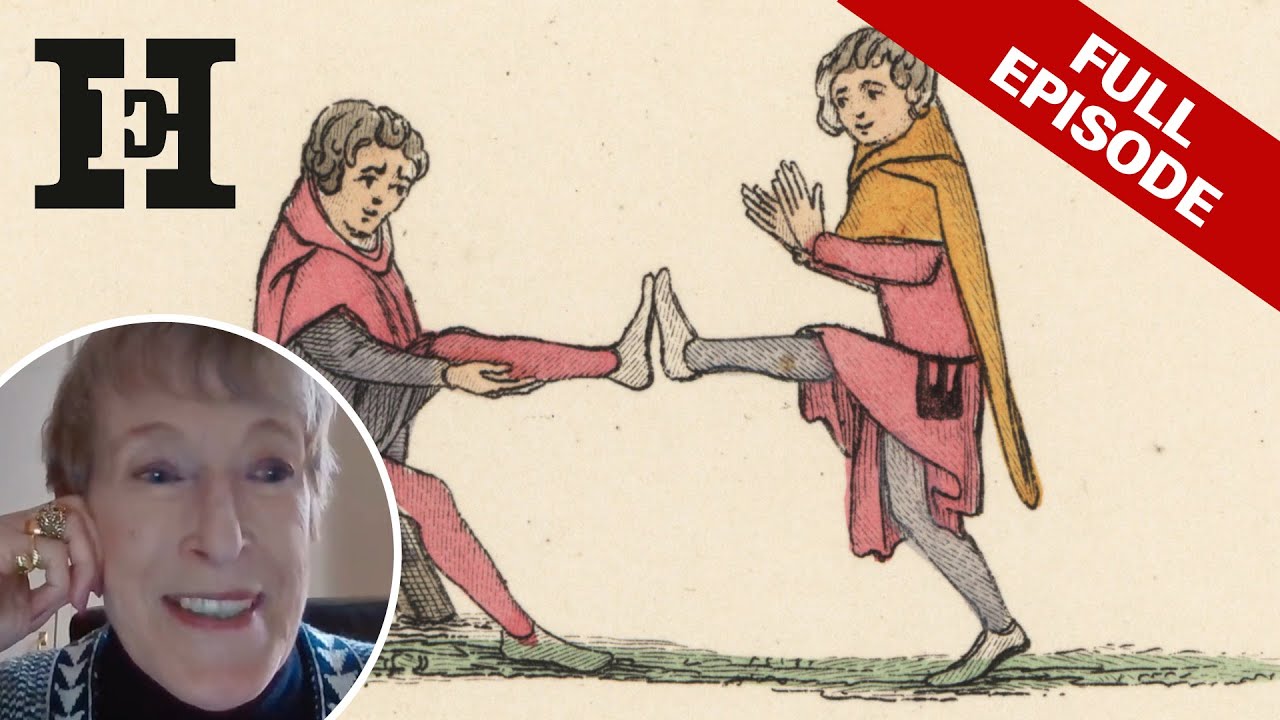
People in the Middle Ages did exercise for their health. A London priest prescribed rope climbing and stone lifting for clergy who needed to exercise in private. Nuns and monks were encouraged to walk in gardens and fields. And although wrestling belonged to some elite physical culture, one royal physician told his king to ride instead: wrestling was beneath the dignity of the office.
The strongest evidence comes from later medieval and early Tudor England, with examples from elsewhere in Europe. What counted as exercise was not simply hard physical work. It was movement deliberately chosen to aid digestion, lift the spirits and preserve health. The right amount was usually enough to warm and stimulate the body, but not enough to leave a person gasping for breath.
Did medieval people work out, or did they just work?
They did both, but medical writers drew a distinction between the two. A mason could spend the day lifting stone without doing what a health manual called exercise; a canon could lift a stone in his room specifically for his health. The difference was the purpose of the activity, not how much effort it took.
Recommended Free Tools
In her 2022 study of exercise in later medieval England, historian Carole Rawcliffe distinguishes the heavy labour of artisans from the deliberate movement prescribed in a regimen sanitatis, or guide to preserving health. Merchants and tradespeople might spend much of their working lives on foot or horseback without following an exercise regimen. Most people had neither the leisure nor the resources to exercise for its own sake. Even a walk that cost nothing took time; space to take it could be a problem, too.
Popular on Amazon

- 【90 Degree Full Function USB C Adapter】Supports the latest USB4 standard for up to 40Gbps of bandwidth, 8K video support, and up to 240W Fast charging; Support USB PD 3.1 Extended Power Range (EPR) including 140W, 180W and 240W. Your productivity is easily doubled. *Warm Tip: For the best fit, please make sure the USB-C port is fully exposed; thick or bulky cases may affect compatibility.
- 【Reliable Quality】Made from high-quality, scratch-resistant aluminum alloy, delicate metal frame. get excellent wear resistance and heat dissipation. Non-Slip Design for easier insertion and removal.
- 【Small and portable】Ultra thin size, ultra compact design, a petite physique that matches the minimalist design of your modern laptops. Coming with a slim figure that won't block the port next to the one it's plugged into.
- 【Compatibility】Widely work with most usb c, thunderbolt 4/3 devices. Compatibilit for ROG Ally, Steam Deck, Switch, MacBook Pro, Quest 3 VR headset, Surface Book 2, iPhone 18/17/16/15, Samsung Galaxy S23/S22/S21, Note 20/10, Google Pixel, ChromeBook, etc.
- 【Excellence Customer Support】If you experience any issues or cable failure, simply reach out to our dedicated customer service team. We provide a prompt response within 18 hours, providing you with the necessary technical support to resolve any concerns.
Some early guides were tailored to royal or aristocratic households. Advice moved into English, French and German and reached a broader market with print. The English Governall of Health, printed around 1506, acknowledged that suitable exercise varied with one’s station, rich or poor. But wider circulation tells us what people could read, not how many followed it. Rawcliffe points to Edward IV’s disregard for his physicians and to conspicuous eating and drinking in wealthy households and monasteries. Having a regimen was no guarantee of living by it.
Why did medieval doctors prescribe exercise?
They believed movement stirred up and distributed the body’s innate heat. That heat was thought to help digest food and clear bodily waste. The right exercise could also encourage sleep, ease fear or melancholy, and get a person out into wholesome air.
In the Galenic model Rawcliffe describes, food was first “cooked” in the stomach, then passed to the liver and converted into the four humours: blood, hot and wet; phlegm, cold and wet; black bile, cold and dry; and yellow bile, hot and dry. A modest predominance could explain a person’s temperament; a serious imbalance could explain illness. Exercise and rest were one of six things a person could manage to preserve health. The others were diet, air and surroundings, emotions, sleep, and what the body expelled or took in again. Diet came first, but exercise had a special role because it was supposed to put heat to work throughout the body.
Some authorities saw movement as a way to avoid more taxing interventions. In the Latin Canon, Avicenna argued that sufficiently energetic daily exercise could spare a person harsh purges, which he believed dried the body and accelerated ageing. Galen thought regular activity might spare temperate people a strict diet and bloodletting; for heavy eaters and drinkers, he treated it as a standing remedy. These were arguments within humoral medicine, not evidence that exercise did what those treatments were supposed to do.
For clergy, movement could have a spiritual purpose as well. The London priest John Mirfeld compared excessive rest to stagnant water going foul or unused iron rusting. Outdoors, by contrast, the sight of the sky, sea or green landscape could prompt gratitude and praise. “Exercise therefore is good,” he wrote, “since, in some measure, it unites a man to his Creator.” As Rawcliffe explains in the HistoryExtra podcast, there was a practical side: friars and canons who went out to preach or visit the poor needed to be fit enough to do it.
Did medieval monks really lift weights and climb ropes?
Some clergy were advised to do both. The best-documented example is a written prescription for the canons and hospital brethren at St Bartholomew’s in London, not a record of an entire community training together.
Also popular on Amazon

- 5-in-1 Connectivity: Equipped with a 4K HDMI port, a 5 Gbps USB-C data port, two 5 Gbps USB-A ports, and a USB C 100W PD-IN port. Note: The USB C 100W PD-IN port supports only charging and does not support data transfer devices such as headphones or speakers.
- Powerful Pass-Through Charging: Supports up to 85W pass-through charging so you can power up your laptop while you use the hub. Note: Pass-through charging requires a charger (not included). Note: To achieve full power for iPad, we recommend using a 45W wall charger.
- Transfer Files in Seconds: Move files to and from your laptop at speeds of up to 5 Gbps via the USB-C and USB-A data ports. Note: The USB C 5Gbps Data port does not support video output.
- HD Display: Connect to the HDMI port to stream or mirror content to an external monitor in resolutions of up to 4K@30Hz. Note: The USB-C ports do not support video output.
- What You Get: Anker 332 USB-C Hub (5-in-1), welcome guide, our worry-free 18-month warranty, and friendly customer service.
Mirfeld copied the routine from Bernard Gordon’s 1308 regimen. For a man who ought not to exercise conspicuously in public, it prescribed a stout rope knotted at the end and hung in his chamber. The man was to grasp it with both hands, pull himself off the ground and hang there. The text then described taking a run with the rope in hand, jumping and turning in the air. If he preferred, he could carry a stone fitted with a ring from one part of the room to another, hold it up, or lift it towards his neck until he began to tire.
Quick wins for a faster PC:
Fix the driver behind crashes, sound loss and screen glitchesFind Drivers →Repair Windows errors before they cause bigger problemsFix Now →The stone, the text says, weighed thirty pounds. That is the load in one prescription, not the average weight lifted by medieval clergy. Nor does the text establish how many canons did the routine. The HistoryExtra account also mentions monks jumping hedges. The chamber rope and ringed stone are the examples for which the scholarly study gives a detailed written source. The exercise might look like strength training, but the point was to preserve health when public exertion would have been improper, not to build a sculpted torso.
What exercise did medieval nuns and monks do outdoors?
They walked. For nuns, the evidence points to regular walks in gardens and other protected spaces, not military-style marching. For monks, too, walking offered an acceptable alternative to riding for pleasure or hunting, activities that reformers and satirists condemned precisely because some clergy did them.
At Wherwell Abbey in Hampshire, the mid-thirteenth-century abbess Euphemia improved hygiene and care for the sick and laid out gardens, vineyards and shrubberies where the sisters could exercise and “enjoy the pure air.” It was a provision for spiritual as well as bodily welfare. The same reasoning applied outside convents. In 1277, while staying at Gloucester Castle, Queen Eleanor of Provence had a bridge built over the ditch so she and her attendants could walk in the grounds of Lanthony Priory. She also had a personalised health regimen.
Other records show what happened when space or permission was lacking. In 1455, Durham’s Benedictines complained that their cramped precinct gave them too little room to exercise, and that their diet made this dangerous. In Bristol in 1535, the abbot of St Augustine’s resisted restrictions imposed by an agent of Thomas Cromwell. He asked to be allowed to walk on the green and marsh and for his brethren to go out in groups of three or four among the hills and fields. The walks, he argued, would refresh their minds and ease their veins so they could continue in God’s service day and night.
What’s actually slowing this PC down?
Pick the symptom - the matching free tool is one click away.
At Barnwell in Cambridgeshire, Augustinians treated the strain of a monotonous routine with rest, diet and recreation rather than ordinary medicine. Brethren who were low in spirits or troubled by indigestion were advised to walk in the vineyard, garden or along the river; they could also go beyond the precinct into fields, meadows or woods. At Walcourt, in present-day Belgium, monks acquired a health guide in 1444 that opened by recommending moderate exercise in fresh air for men with a sedentary routine. A garden was not merely a pleasant setting: access to air, space and a change of scene was part of the prescription.
Also popular on Amazon

- Sleek 7-in-1 USB-C Hub: Features an HDMI port, two USB-A 3.0 ports, and a USB-C data port, each providing 5Gbps transfer speeds. It also includes a USB-C PD input port for charging up to 100W and dual SD and TF card slots, all in a compact design.
- Flawless 4K@60Hz Video with HDMI: Delivers exceptional clarity and smoothness with its 4K@60Hz HDMI port, making it ideal for high-definition presentations and entertainment. (Note: Only the HDMI port supports video projection; the USB-C port is for data transfer only.)
- Double Up on Efficiency: The two USB-A 3.0 ports and a USB-C port support a fast 5Gbps data rate, significantly boosting your transfer speeds and improving productivity.
- Fast and Reliable 85W Charging: Offers high-capacity, speedy charging for laptops up to 85W, so you spend less time tethered to an outlet and more time being productive.
- What You Get: Anker USB-C Hub (7-in-1), welcome guide, 18-month warranty, and our friendly customer service.
Did medieval kings wrestle to keep fit?
Wrestling could belong to elite physical culture, but the royal regimen that gives the clearest answer recommended against it. Between 1305 and 1308, the physician Arnald of Villanova advised James II of Aragon to ride because riding engaged several parts of the body and suited a monarch.
Galen had approved of ball games, but Arnald judged them undignified for a head of state. A competitive contact sport such as wrestling was even less becoming. There is no contradiction in finding wrestling on a list of gentlemanly pastimes and finding it discouraged for a reigning king: a physician was advising the holder of an office, not merely a man looking for exercise.
Hunting, on foot or horseback, fitted noble expectations better. It also matched Galen’s preference for activities that exerted the body and delighted the soul. In his Livre de la Chasse of 1389, Gaston Phébus, count of Foix, drew on Hippocrates to argue that men who ate sparingly and exercised hard lived longer. Edward, duke of York, carried the argument into the English Master of Game: hunters supposedly ate and drank less and sweated more, which would keep them healthier and extend their lives. This was a defence of hunting couched in medical language, not a finding that hunters lived longer.
Why was archery praised but football condemned?
Sir Thomas Elyot thought archery struck a good balance between exertion and restraint. Football, often called camping, struck him as violent and liable to leave players nursing injuries and grudges.
Elyot was writing in the early Tudor period about the education of a gentleman’s son destined for public responsibility. He approved of tennis, swimming, running and dancing, and called riding the most honourable exercise for a noble person. Archery was his “moderate and meane between euery extremytie.” That preference was patriotic as well as medical: from the 1360s, English ordinances and statutes directed men and boys to practise archery for national defence in preference to other pastimes. Yet the same activity could serve different ends. From 1462 the infirmary garden at Westminster Abbey gave monks access to archery butts, or targets. The monks were exempt from the national archery laws and shot for their health.
In contrast, Elyot saw “beastly fury and extreme violence” in football. Official censure of the game also reflected fears that it could spill into wider disorder, crime or rebellion. And even a pastime Elyot approved of could be improper in the wrong place: young Benedictines at Norwich got into trouble for late-night dancing in the guest house in the early sixteenth century. Readers can find Elyot’s argument in The Book Named the Governor (The Boke Named the Gouernour), first published in 1531. Rawcliffe counts thirty-seven folios on exercise in the 1537 edition.
Also popular on Amazon

- Portable and powerful USB-C HUB: BENFEI USB Type-C HUB, with super-soft and knot-free silicone woven design cable, meets most mobile office needs. Compact, lightweight, stylish, and powerful portable USB C Hub equipped with 1 x HDMI port, 1 x 100W charging, and 3 x USB ports. 18-month warranty, 24-hour response, to ensure you feel at ease when using our product.
- Design centered on comfort and reliability: Thanks to BENFEI's end-to-end in-house cable production capability, in-house PCBA and assembly capability, using the industry's most advanced silicone woven design and process, 20cm cable in length, no knots, super-soft, the HUB is easy to use in all scenarios: laptop, tablet, stand etc. Super-soft, 25000+ life cycles, to meet your daily carrying and office needs.
- 100W Charging: Support up to 90W USB C pass-through charging via Type-C port to keep your laptop powered. 10W is reserved for other interface operations. No data and video function on the Type-C port.
- 4K HDMI Display: The HDMI port supports media display at resolutions up to 4K 30Hz, keeping every incredible moment detailed and ultra vivid. Please note that the C port of the Host device needs to support video output.
- Transfer Files in Seconds: Transfer files and from your laptop at speeds up to 10 Gbps with USB A 3.2 port. Extra 2 USB A 2.0 ports are perfectly for your keyboards and mouse.
How hard did people exercise, and when were they told to stop?
Moderation was the rule. A person should move the limbs evenly and stop as discomfort, fatigue or breathlessness set in. Brisk walking in the uplands was valued because it combined controlled exertion with air believed to be purer. Harder exercise belonged in the temperate part of the day, not in extreme heat or cold.
| When | What the texts advised | Why |
|---|---|---|
| On rising | An English Secreta secretorum from about 1484 advised a short, easy walk around the chamber and an even stretch of the limbs. | Stretching was thought to strengthen the body and help move digested humours. |
| Before more vigorous exercise | Elyot’s The Castel of Health said to begin when the urine was neither red nor pale but golden. | Colour was taken as a sign that the body was ready for exertion. |
| Just after eating | The Secreta secretorum allowed a short, soft walk or simply standing upright. A fifteenth-century English Lilium medicine, based on Gordon’s 1305 work, warned against riding on a very full stomach. | Gentle movement was meant to help food settle. Hasty movement was thought to draw heat away from digestion; riding after a large meal was blamed for nausea and other digestive upsets. |
These rules could outlast the households they were written for. Rawcliffe traces Elyot’s timing advice back to a French regimen written around 1256 by Aldobrandino of Siena for Beatrice of Savoy and her daughters, among them Queen Eleanor. The Castel of Health, first published in 1536, rapidly ran through seventeen editions. Other advice could be more demanding: a dietary said to have been given by Emperor Sigismund to Henry V recommended walking in the hills before a light midday meal, then walking by the water for three hours after a second meal at five. It warned against going either too slowly or too fast. That was an ideal set down for a king, not a record of what he did after supper.
Did the advice change with age or health?
Yes. Doctors adjusted exercise to the person’s age, constitution and ability to move. Someone classified as phlegmatic or melancholic was thought to be cold and was generally prescribed more exertion. Choleric people were thought to overheat easily, while sanguine people were advised to exercise mildly.
Ageing, in this model, meant losing warmth and the body’s “radical moisture.” Roger Bacon, who died in 1294, preferred an easy ride or gentle walk for older people to strengthen their limbs and help circulate their spirits. A Salernitan regimen printed by Thomas Paynell in 1528 argued that people accustomed to exercise from youth could bear exertion better in old age than younger people who were unused to it. Advice for infants prescribed gentle play before meals; for boys being prepared for elite adulthood, more demanding exercise was supposed to harden the muscles as they grew.
The medical tradition Rawcliffe surveys also made accommodations. Someone with painful feet, varicose veins or arthritic knees might row or lift light weights while resting the weak part. Even the sway of a litter was thought to offer some benefit to a person who could not walk, alongside gentle massage or morning rubs with oil. When physical activity was no longer possible, conversation and puzzles offered another kind of occupation.
Free tools Windows power users keep installed
One-click scans. No signup required.
Why did plague advice say not to sweat?
From the late 1340s, plague writers faced a dilemma within their own theory of disease: people needed movement to digest food and clear bodily excess, but sweating heavily was thought to open the pores to poisonous air. Their solution was light exercise, not complete rest.
Also popular on Amazon

- 【Read before You Buy】 Note: This adapter is USB 2.0 version and cannot transmit HDM, VGA, or other video signals. Nevertheless, they are fully capable of charging devices,duplicating files, and can be seamlessly integrated with USB-C earphones, wireless network adapters, and SD card adapters.
- 【Easy to Use and Safe】Thanks to modern manufacturing techniques, we've made these adapters sufficiently compact so that they can remain inserted in your device without noticeable protrusion or inconvenience. This means you don't have to constantly plug and unplug them, reducing the likelihood of wear and misalignment, and making them more convenient to carry around.
- 【Reliable Quality】Engineered for enhanced durability, durable aluminum alloy shell material,get excellent wear resistance and heat dissipation,the male USB C and female USB connectors & the male USB and female USB C connectors are designed to be plugged and unplugged up to 20000 times. Provides data transfer, device charging, memory space expansion, and additional computer peripherals.
- 【Think more for you】Do you need to connect a USB-C-enabled device to an odd device that only has USB-A ports? Then these USB-A male to USB-C female adapters are made for you.Simply insert the adapter into the USB-A port on the device, and you can instantly connect your USB-C device to the device that originally didn't have the correct connection port.
- 【Trusted xiwxi Quality and Service】As a responsible brand seller, you will receive xiwxi's 12-month Quality assurance and lifetime friendly customer service, you're not just buying a product,you're investing in peace of mind with all-round quality and exceptional customer service.
Fifteenth-century English tracts advised avoiding rich food and told readers to “swete noghte gretly.” Around 1475, Friar Thomas Multon argued that corrupt air did not infect everyone alike: people who already harboured corrupt humours were especially vulnerable. Cheerfulness also entered the advice, since an uplifted mood was thought to strengthen the spirits that helped the body resist disease.
In plague-time Bologna, a notary wrote to the merchant Francesco di Marco Datini suggesting a few strokes with a saw or several quick trips upstairs if he could not get out. The idea was to move before meals without raising a sweat, much as stirring embers kept them from dying out. For English townsfolk, the Benedictine poet John Lydgate offered a different setting: clear air and walking for good digestion, pleasant gardens, and avoidance of mist and the foul air of dunghills. His Dietary and Doctrine for Pestilence survives in fifty-seven manuscripts, Rawcliffe notes, and was printed by each of the first three English printers. It is a sign of how widely the advice travelled, not that it prevented plague.
Were medieval people fitter than we are?
The evidence does not support a single comparison. Skeletons can reveal some aspects of health, but they cannot establish how often people deliberately exercised, how fit the population was on average, or how it would compare on a modern fitness test.
In her HistoryExtra interview, Rawcliffe contrasted evidence of serious ill health and dental problems with evidence that some high-status people may have been well nourished and muscular. She pointed to Dublin, where higher-status people were often taller and appeared healthier than poorer people. That is a qualitative comparison between social groups, not a measure of training or proof that exercise produced the difference.
What the sources show most clearly is that medieval people distinguished exercise from toil and argued seriously about who should do it, where, and how hard. The most revealing scenes are not necessarily the most strenuous. An abbess making room for a garden walk or an abbot negotiating permission to leave the precinct tells us as much about keeping fit as a rope hung in a canon’s chamber. Movement was supposed to leave a person better able to digest, sleep, think or pray. It was not an end in itself.
Frequently Asked Questions
How did medieval soldiers train to stay fit?
The Roman military writer Vegetius’s De re militari circulated in medieval and Tudor versions. In the 1572 English translation, daily arms practice was said to do more for soldiers’ health than medicine, with infantry training under cover in rain or snow and outdoors otherwise. The work also advised marching before dawn in hot weather and avoiding night marches in frost; these were recommendations for commanders, not a record of what every army did.
Did Aristotle really write a medieval exercise guide?
No. The Secreta secretorum presented itself as advice from Aristotle to Alexander the Great, but that attribution is not genuine. A manuscript associated with the future Edward III in 1326 shows how early the work reached an English royal audience.
The Tool Desk
Outbyte Driver Updater FREEScan for outdated or missing drivers - takes under a minuteDriver Scan →Outbyte PC Repair FREEClear out junk files and repair common Windows errorsFree Scan →Did medieval people think animals needed exercise too?
Yes. Rawcliffe’s study notes that advice about preserving health applied to animals as well as people. The shared premise was that idleness could lead to bodily decline; exercise was not understood solely as a human pursuit.
Where can I find the original sources for medieval exercise?
The open-access study in History quotes and identifies the original texts in its notes. For the chamber exercises, the manuscript reference is British Library Royal MS 7 F XI, folio 129 verso. The dietary attributed to Sigismund is in British Library Harley MS 5086.






Say something about this film